
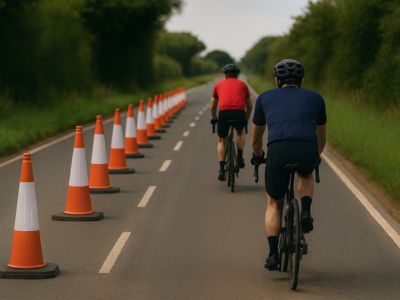


Waiting with ADHD can feel far more exhausting than most people realise. Recently, I found myself driving behind two cyclists on a narrow UK road, unable to overtake safely. I could see ahead exactly where I wanted to be, but I couldn’t reach it at the pace that felt natural to me. Within minutes, my breathing changed, my body tensed, and a familiar frustration rose up. It was a clear reminder of how much of my life used to feel like this: always moving, but never quite able to get where I needed to be fast enough.
For many adults with ADHD, waiting isn’t a small inconvenience. It’s a full-body experience.
When a Few Minutes Feels Like a Lifetime
It’s hard to explain to someone who hasn’t felt it.
That moment behind the cyclists wasn’t just about being delayed. It was about being forced to slow down while the destination lay right there, in sight. The gap between where I was and where I wanted to be felt almost unbearable.
And what hit me most was that this had previously been my everyday life.
That tightness in the chest, the internal pressure, a sense of being held back. And the frustration of knowing where I needed to go, but not being able to get there at a pace that fitted.
For years, this wasn’t occasional. It was constant.
Why Waiting with ADHD Feels So Draining
People often call this impatience, but ADHD-related impatience isn’t about poor manners or a lack of willpower. It’s about the nervous system. Waiting with ADHD can trigger:
- physical tension
- shallow breathing
- restlessness
- irritation or overwhelm
- emotional dysregulation
- a sense of being trapped or stuck
The ADHD brain is wired for urgency, momentum, stimulation, and movement. So when the world demands stillness or delay, the body experiences it as stress. Even a few minutes can feel like too much.
When Waiting Is Necessary and When It’s Inflicted
Of course, some waiting is part of life:
- traffic
- queues
- appointments
- cooking time
- unavoidable delays
But many people with ADHD are not just waiting in normal ways. They are enduring inflicted waiting — waiting created by environments that don’t fit.
That might look like:
- workplaces built around constant monitoring
- systems that reward slowness and bureaucracy
- expectations to sit still, stay quiet, or “be more patient”
- needing to mask urgency to appear acceptable
- waiting for permission to do things differently
This kind of waiting doesn’t just frustrate. It erodes.
The Impact of Environment (Not Personal Failure)
That moment on the road reminded me how much of my life used to feel like living permanently behind cyclists. I was always trying to move forward, but was constantly slowed down by external constraints.
And it also reminded me that I intentionally changed my life.
An opportunity arose, and although it involved uncertainty, I chose possibility over fear. I changed my environment, my pace, my working life, and the expectations placed on me.
As a direct result of these changes, I no longer take ADHD medication.
At this point, I want to make it clear that I believe mediation is highly personal. For many people, it is life-changing, supportive and absolutely the right choice. Maybe it was important for me to take it for a while to give my brain a chance to develop new pathways. But there came a point where I realised I only required medication to tolerate an unsuitable environment.
I feel sad that I lived so long in a world that made me believe I needed to be “fixed,” when what really needed changing was the road I was trying to travel on.
Your Body Remembers
Even when life becomes more aligned, the body remembers the cost of living in the wrong environment.
That is why a few minutes of enforced slowing can quickly bring back old feelings. It isn’t regression; it’s recognition. Your nervous system is saying:
“This feels familiar. This used to be daily.”
If You Feel Like You’re Stuck Behind Cyclists
If you can see where you want to be… if the destination feels close, but you’re not moving at a pace that suits you… or if life feels narrowed by invisible roadworks, and waiting is draining the life out of you… Then it may not be you that needs fixing. It may be your environment.
An Invitation
If you feel stuck behind cyclists in your own life — frustrated, tense, held back — I’d love to support you.
Book a discovery call with me, and we’ll explore what changes you may be able to make right now that can move you closer to an environment that truly works for you.
You don’t have to live in constant tension. There is a wider road ahead, and you deserve to reach it at your pace.


